
Mastering Blackjack Odds: A Guide for Serious Gamers
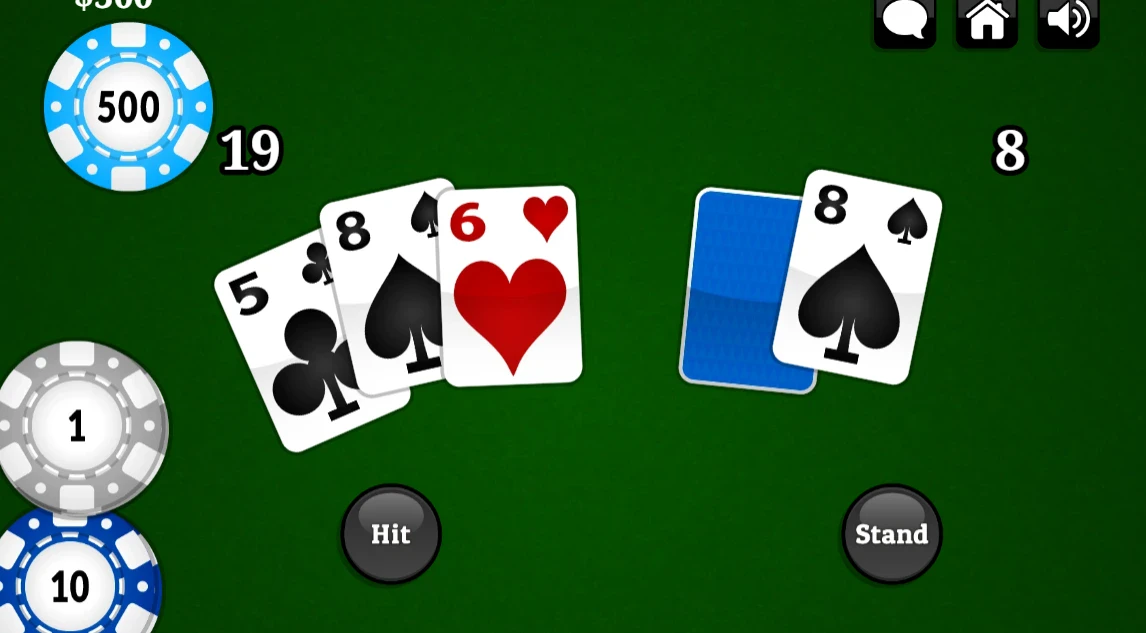
Blackjack is a simple game that does rely heavily on the luck of the cards you are dealt. However, it does involve strategy too, especially when looking at the long-term results. Understanding your odds of winning a hand can help influence your next moves and ultimately gives you a far better chance of beating dealers over the long haul.
Whether playing free Blackjack games with virtual money or hitting a real-life casino, the following guide is just for you.
Understanding Blackjack Odds: House Edge & Casino Odds
Before analyzing the odds of winning on a specific hand, it's important to understand the overall odds and house edge. The good news is that Blackjack is a game where the house has its smallest edge. Generally, players have a 42% chance of winning a hand while the dealer has a 49% chance. The remaining 9% of hands result in a tie.
So, even a new player stands a good chance of winning a specific hand or profiting from a single session. However, with a perfect strategy and savvy decisions, players can reduce the house edge to as little as 0.5%.
Understanding Blackjack Odds: Your Chances of Winning or Busting
When playing a hand of Blackjack, your actions are likely to be influenced by the dealer's upwards facing card. Some players may even allow the results of their previous hands to impact their staking strategy. Nevertheless, the first thing to analyze is your general odds of winning based on your opening hand.
Each card from 2-10 has a score represented by its numerical value while the face cards are all worth 10. The Ace is flexible as it can be used as a 1 or 11. Your initial hand score is determined by the cumulative value of those two cards. Without factoring in the dealer's initial hand, the odds of winning or busting are as follows:
| Hand Score | Odds of Winning (%) | Odds of Busting on Card #3 (%) |
|---|---|---|
| 11 or under | 50 | 0 |
| 12 | 30 | 31 |
| 13 | 35 | 39 |
| 14 | 42 | 56 |
| 15 | 50 | 58 |
| 16 | 60 | 62 |
| 17 | 70 | 69 |
| 18 | 77 | 77 |
| 19 | 86 | 85 |
| 20 | 92 | 92 |
| 21 | 100 | 100 |
While the above odds are based on Classic Blackjack, including themed versions like Winter Blackjack, the variance between different game types (European, Spanish, etc.) is minimal.
Blackjack Odds: The Probability of Dealers Busting
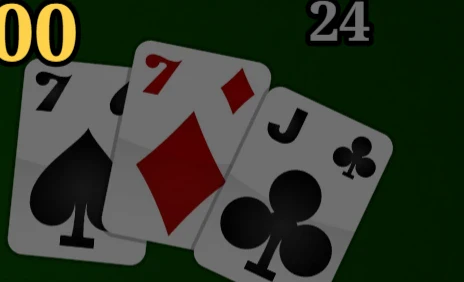
The table above instantly gives all players a better insight into the probability of winning based on their opening two cards. To build a strategy, though, you need the added context of the dealer's hand.
Dealers do not play their hand until after you have played yours. However, you know that the dealer will Hit on 16 or lower and Stand on 17 and above (except for a soft 17 where their hand includes an Ace). Moreover, dealers place one of their cards as an upfacing card. The odds of them busting based on the value of their upwards facing card are as follows:
| Upfacing Card | Probability of Busting the Hand (%) |
|---|---|
| 2 | 35 |
| 3 | 37 |
| 4 | 42 |
| 5 | 42 |
| 6 | 42 |
| 7 | 26 |
| 8 | 24 |
| 9 | 23 |
| 10, Jack, Queen, or King | 23 |
| Ace | 17 |
As you can see, the dealer's strongest card is an Ace while a 4, 5, or 6 is deemed their weakest. This information should influence the decision on whether to Hit or Stand on your own hand.
Maximizing Wins with Perfect Strategy
Understanding the general probability of winning based on your cards is a great starting point, especially for beginners. Taking the dealer's probability of busting helps you make an informed decision too. For the very best results, though, you need to analyze both simultaneously. This is how you can build a perfect strategy.
The perfect strategy takes every possible permutation (your hand versus the dealer's upfacing card) and analyses them individually. While you don't need to know the odds of each situation, it is worth remembering whether you should statistically Hit or Stand in every scenario. The following table will provide the answers you need:
| Your Hard Total | Opponent Cards to Hit | Opponent Cards to Stand |
|---|---|---|
| 11 or under | 2, 3, 4, 5, 6, 7, 8, 9, 10, J, Q, K, A | Never stand on 11 or under. |
| 12 | 2, 3, 7, 8, 9, 10, J, Q, K, A | 4, 5, 6 |
| 13 | 7, 8, 9, 10, J, Q, K, A | 2, 3, 4, 5, 6 |
| 14 | 7, 8, 9, 10, J, Q, K, A | 2, 3, 4, 5, 6 |
| 15 | 7, 8, 9, 10, J, Q, K, A | 2, 3, 4, 5, 6 |
| 16 | 7, 8, 9, 10, J, Q, K, A | 2, 3, 4, 5, 6 |
| 17 or higher | Never hit on 17 or higher. | 2, 3, 4, 5, 6, 7, 8, 9, 10, J, Q, K, A |
It should be noted, however, that a soft hand (one in which you hold an Ace) does impact the probability of winning as you have the flexibility of playing it as a 1 or an 11. The moves within the perfect strategy for players who have been dealt a soft hand are as follows:
| Your Hand | Opponent Cards to Hit | Opponent Cards to Stand |
|---|---|---|
| A + 2 | 2, 3, 4, 5, 6, 7, 8, 9, 10, J, Q, K, A | Never stand on this hand. |
| A + 3 | 2, 3, 4, 5, 6, 7, 8, 9, 10, J, Q, K, A | Never stand on this hand. |
| A + 4 | 2, 3, 4, 5, 6, 7, 8, 9, 10, J, Q, K, A | Never stand on this hand. |
| A + 5 | 2, 3, 4, 5, 6, 7, 8, 9, 10, J, Q, K, A | Never stand on this hand. |
| A + 6 | 2, 3, 4, 5, 6, 7, 8, 9, 10, J, Q, K, A | Never stand on this hand. |
| A + 7 | 2, 3, 4, 5, 6, 7, 8 | 9, 10, J, Q, K, A |
| A + 8 | Never hit on this hand. | 2, 3, 4, 5, 6, 7, 8, 9, 10, J, Q, K, A |
| A + 9 | Never hit on this hand. | 2, 3, 4, 5, 6, 7, 8, 9, 10, J, Q, K, A |
| A + 10, J, Q, K | Never hit on this hand. | 2, 3, 4, 5, 6, 7, 8, 9, 10, J, Q, K, A |
Boosting Your Chances of Winning: Splits and Doubles
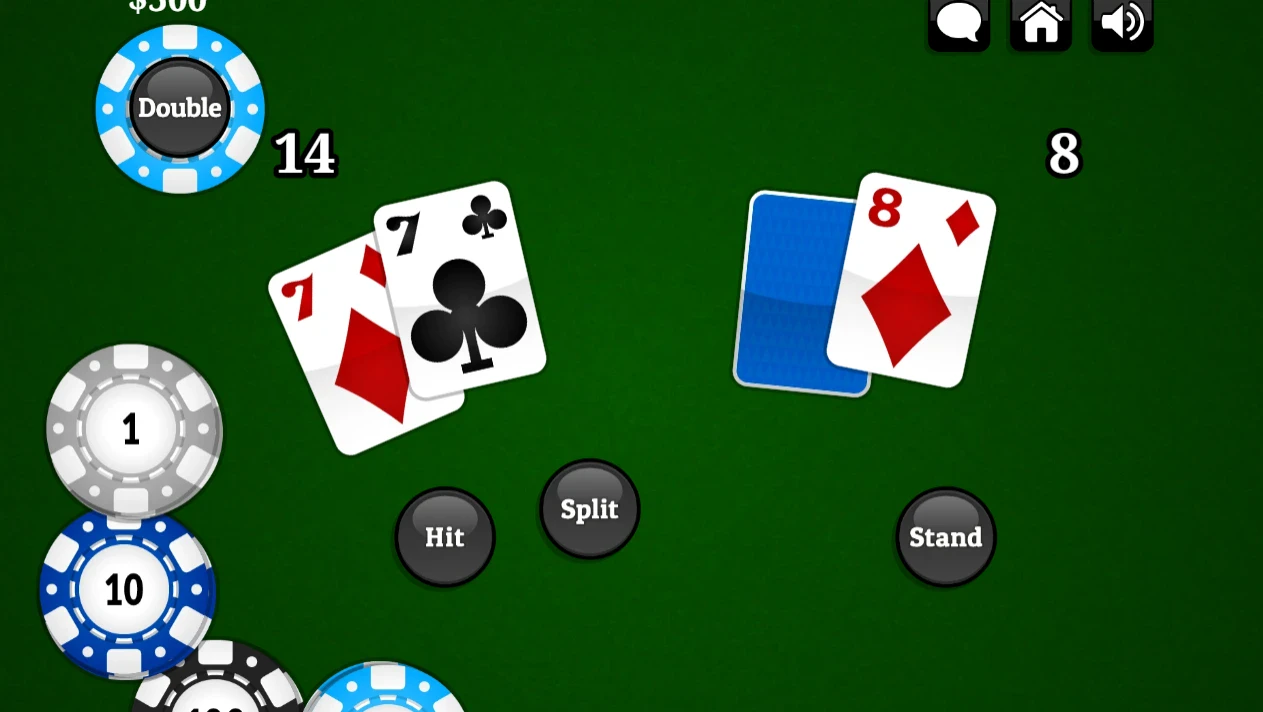
The above tables will help you maximize your odds of winning individual hands. However, true success at the Blackjack table is defined by your profits or losses, regardless of whether playing for real money or at a free online table. So, strategic staking is an essential feature.
Some tables allow you to Split a pair into two separate hands. It allows you to play two hands simultaneously, but does require you to place another wager on the second hand. The table below explains whether you should Split a pair.
| Your Hand | Opponent Cards to Split | Opponent Cards to Not Split |
|---|---|---|
| 2 + 2 | 2*, 3*, 4, 5, 6, 7 | 8, 9, 10, J, Q, K, A |
| 3 + 3 | 2*, 3*, 4, 5, 6, 7 | 8, 9, 10, J, Q, K, A |
| 4 + 4 | 5*, 6* | 2, 3, 4, 7, 8, 9, 10, J, Q, K, A |
| 5 + 5 | Never split. | 2, 3, 4, 5, 6, 7, 8, 9, 10, J, Q, K, A |
| 6 + 6 | 2*, 3, 4, 5, 6 | 7, 8, 9, 10, J, Q, K, A |
| 7 + 7 | 2, 3, 4, 5, 6, 7 | 8, 9, 10, J, Q, K, A |
| 8 + 8 | 2, 3, 4, 5, 6, 7, 8, 9, 10, J, Q, K, A | Always split. |
| 9 + 9 | 2, 3, 4, 5, 6, 8, 9 | 7, 10, J, Q, K, A |
| 10 + 10 (or J,Q,K) | Never split. | 2, 3, 4, 5, 6, 7, 8, 9, 10, J, Q, K, A |
| A + A | 2, 3, 4, 5, 6, 7, 8, 9, 10, J, Q, K, A | Always split. |
Some tables also allow you to double the wager when splitting. In these instances, you should take this option on the cards that have an * next to them.
Doubling is also offered on some tables when you don't have a pair. You should double on the following hands:
- Any hand where you have an 11.
- You have a 10 and the dealer has anything lower than a 10.
- You have a 9 and the dealer has a 3, 4, 5, or 6.
- The dealer has a 5 or 6 showing and you have an A + 2.
- The dealer has a 5 or 6 showing and you have an A + 3.
- You have an A + 4 and the dealer has a 4, 5, or 6.
- You have an A + 5 and the dealer has a 4, 5, or 6.
- You have an A + 6 and the dealer has a 3, 4, 5, or 6.
- The dealer has 2, 3, 4, 5, or 6 and you have an A + 7.
- The dealer has a 6 and you have an A + 8.
You may have noted that it is statistically worth doubling on some soft hands that would otherwise require you to Stand.
Does a Perfect Strategy Guarantee a Win?
Now you have a good understanding of how likely you are to win with certain hands and what movies are statistically most likely to see you profit long-term. However, you will never know whether your hands wins or loses (or pushes) until all the cards have been dealt.
But that's the fun of the game. Find out for yourself by testing out your new knowledge and strategy today.